
Does AI coding actually improve productivity? 1.5X, 2X, None, … or Negative?
What level of improvement would satisfy you—2X or 3X? There has been proven and better, non-AI way to boost your software team productivity by 5-10X quickly.

In this series:
Does AI coding actually improve productivity? 1.5X, 2X,… or None?
The cost? AI Token fees are not cheap, not at all. (planned)
For teams that have practiced AI coding for months, has their end-to-end productivity actually improved? (planned)
AI coding refers to using artificial intelligence—usually large language models (LLMs) like ChatGPT, GitHub Copilot, Claude, etc.—to help write code.
In some large tech companies, management has even introduced policies that mandate software engineers to adopt AI coding tools (sometimes marketed as “vibe coding”). But does it actually work? I’ve been skeptical from day one, and I plan to write a series of articles exploring this from different perspectives.
This first article looks at it from a non-technical, executive viewpoint. Ultimately, the promise of adopting any new tool or technology—at least from a business leader’s perspective—is simple: deliver higher, more consistent productivity while maintaining or improving quality.
After all, that’s exactly what the adoption of machines and automation achieved during the Industrial Revolution.
So, despite all the hype (and the so-called “research”), here’s the really-matter question for software managers: How much the end-to-end productivity gain would actually make you satisfied with adopting AI coding—50% (1.5×), 100% (2×), 3×, or even 10×?
The end-to-end productivity I’m referring to here is the actual delivery of value to end-customers. There’s no point in isolating any single step in the process.
My guess is that most software managers would be happy with even 50%, right?
‘Okay, now (after blown through its Claude Code budget for 2026 in April) we’re actually producing 25% more useful consumer features.’” — Uber’s COO Andrew MadDonald said in an interview [ Business Insider: Uber’s COO says it’s getting harder to justify the money spent on AI tokenmaxxing]
To illustrate: with a 50% productivity boost, a team that previously required 100 people could now be replaced by about 67. (A 100% boost would mean the same work could be done with half the staff).
In this article, I will solely focus on the goal. If 50% (1.5x) is highly desirable, then, there are long proven software processes/practices, if done well, have achieved more than 3x.
Some managers may doubt whether a 200% productivity gain is achievable in software development. First, it’s important to understand the nature of software development. Unlike labor-intensive work, it can achieve significant productivity improvements. To illustrate this, I will quote the opening chapter of a well-known book by an author highly regarded by executives.
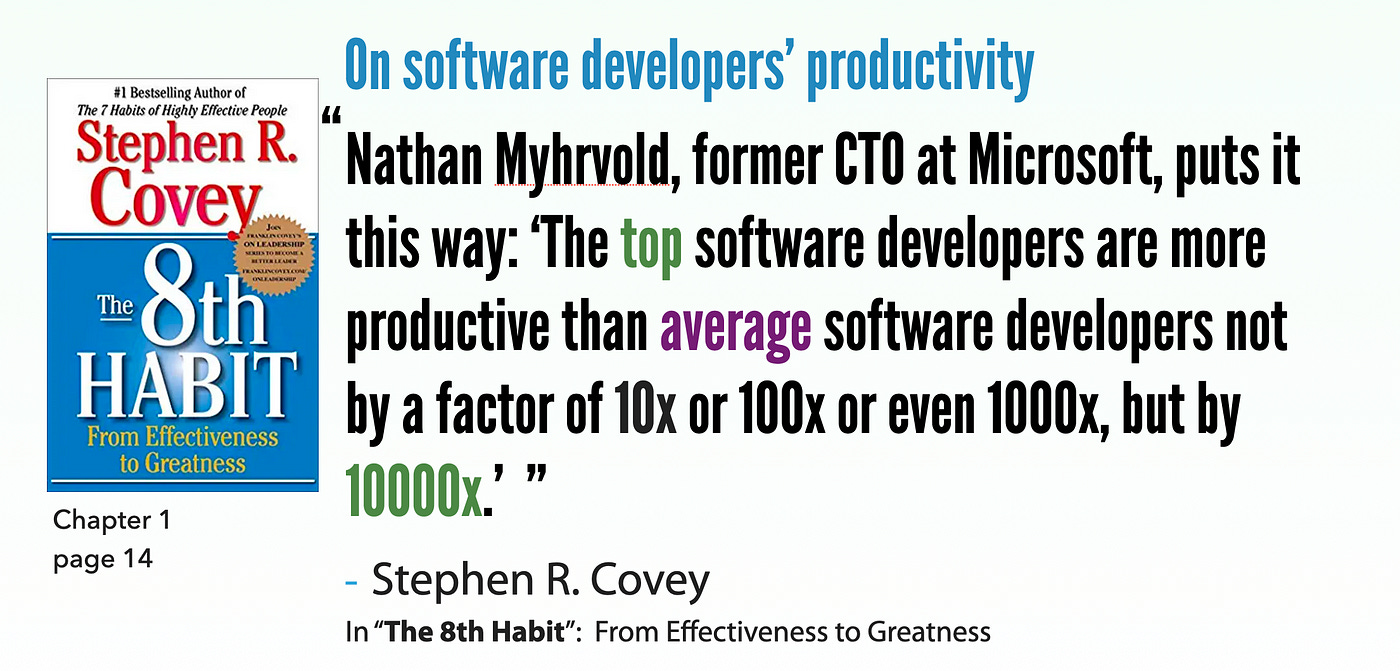
Extreme cases like 10,000× aside, achieving a 2× or 3× productivity boost is not only possible—it’s realistic with the right process, achieved quickly. In fact, over the past 20 years, the software teams I’ve led often saw 3× to 5× improvements in just 2–3 weeks after adopting two powerful practices.
Need more concrete of proof? For readers in doubt (or new ones don’t know me), I have
Developed (and maintained) several internationally highly acclaimed side-hustle apps, such as TestWise, SiteWise, ClinicWise, BuildWise and WhenWise.
For ClinicWise, one former software architect colleague—who had worked on a similar system at a 50-person UK software house—was deeply impressed to learn that I had built it solo, entirely in my spare time.
Now I am a software solopreneur.
Most software professionals have at least heard of these practices, and some may even have tried them. Yet in reality, few teams fully implement them: E2E test automation and Continuous Testing. I avoid using terms like CI or CI/CD here, because in nearly every team I’ve visited, these were fake, not related to real production delivery.
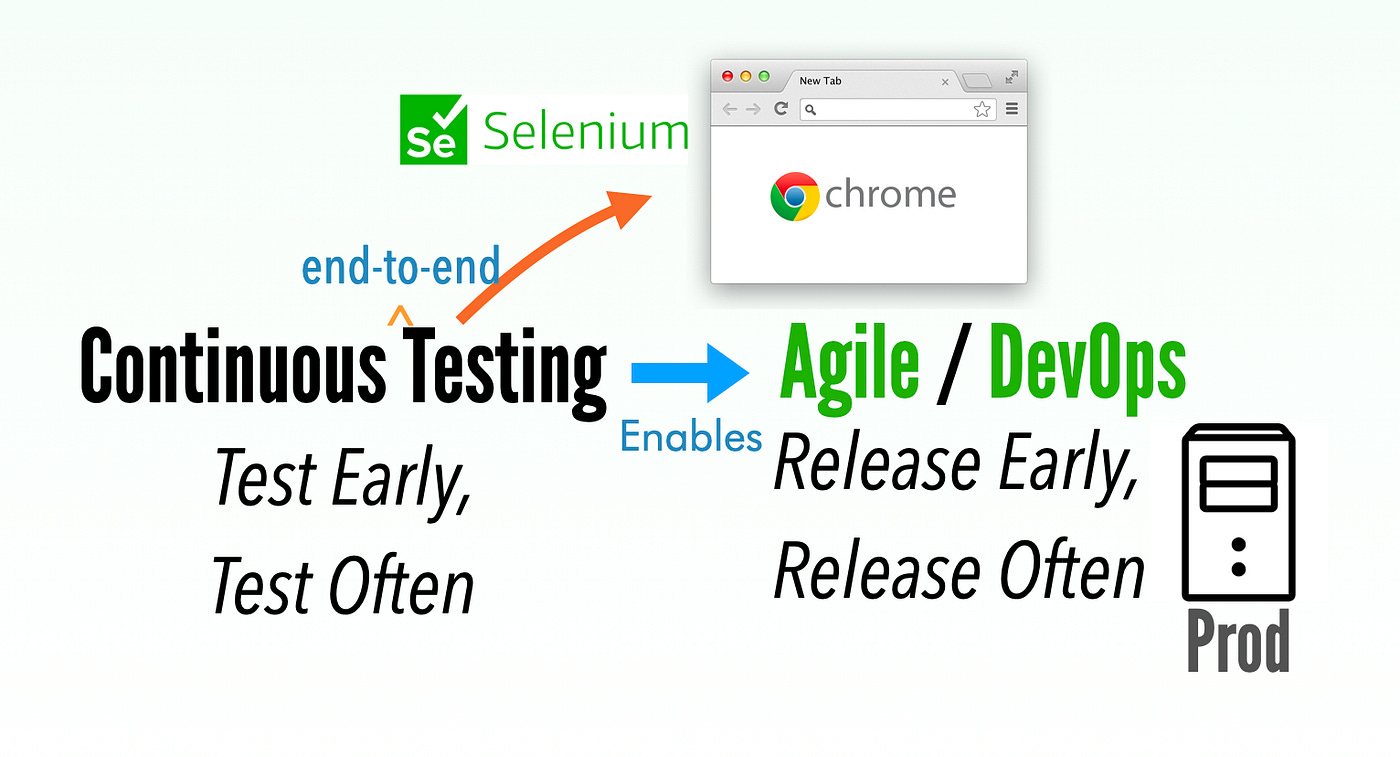
E2E test automation and Continuous Integration (with acceptance testing) have long existed in core agile practices, but rarely be implemented.
Below are some quotes from classic agile books over two decades ago.
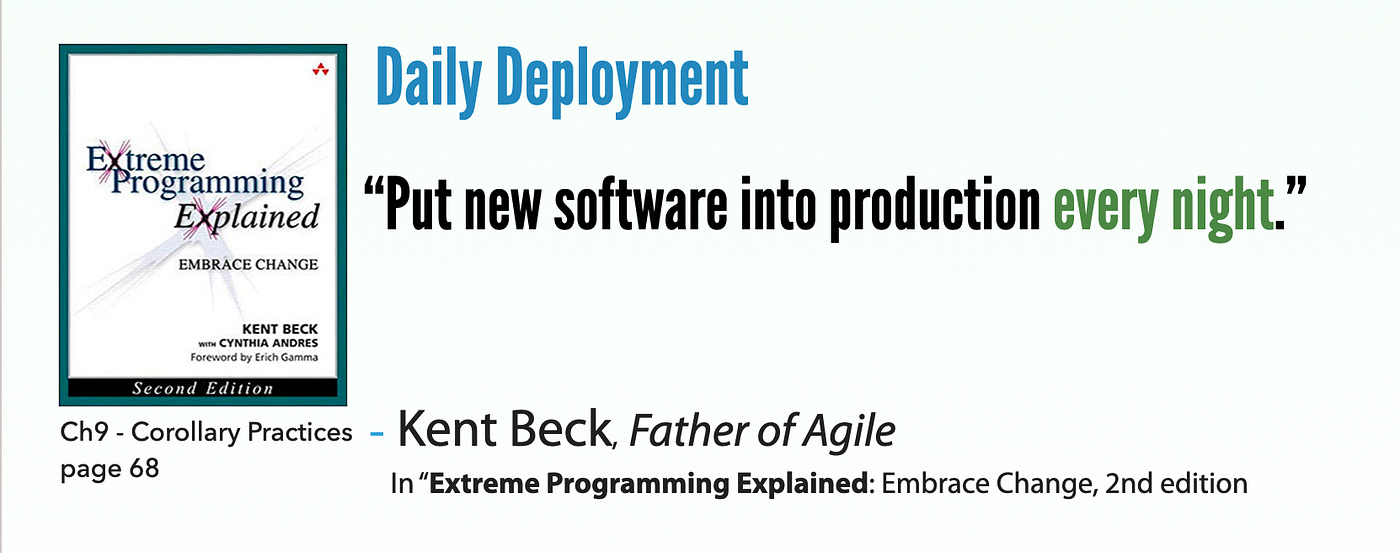
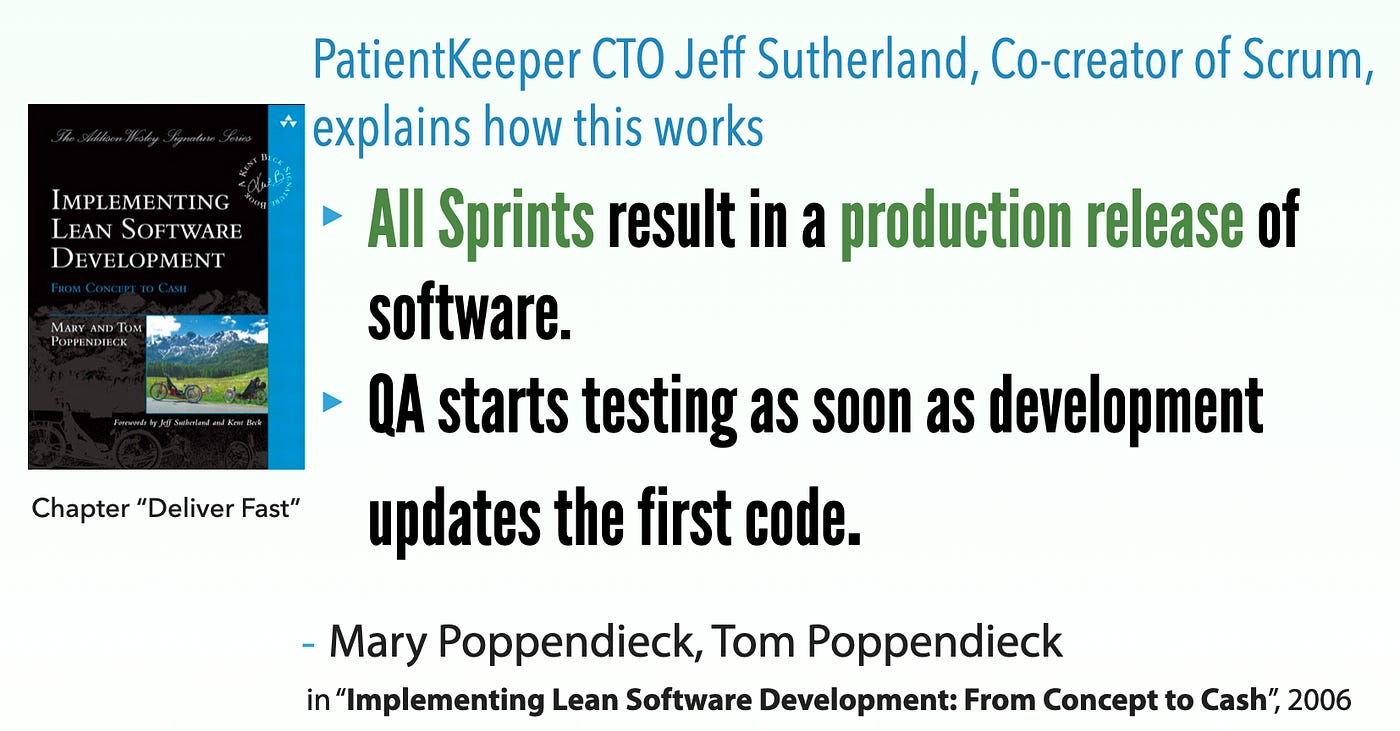
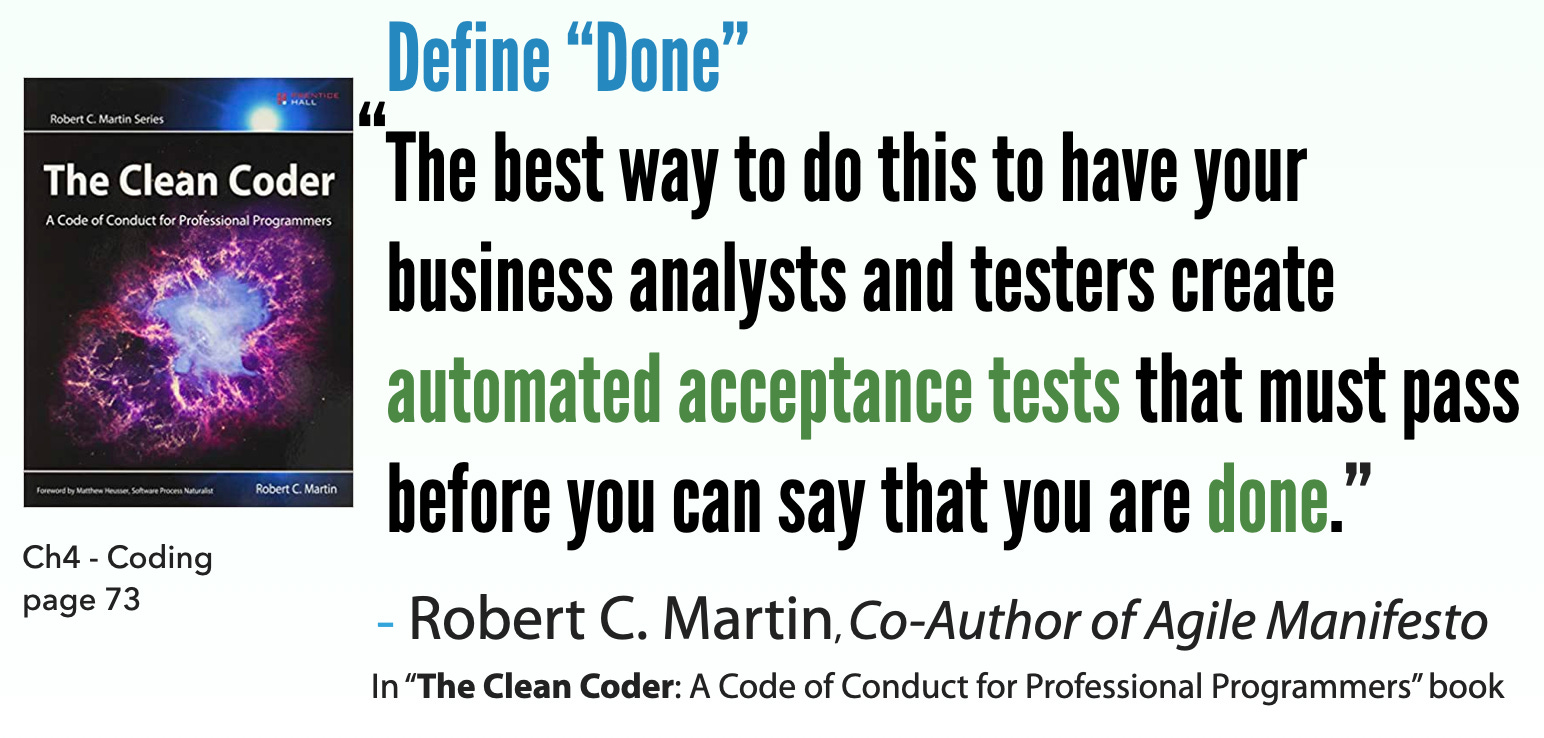
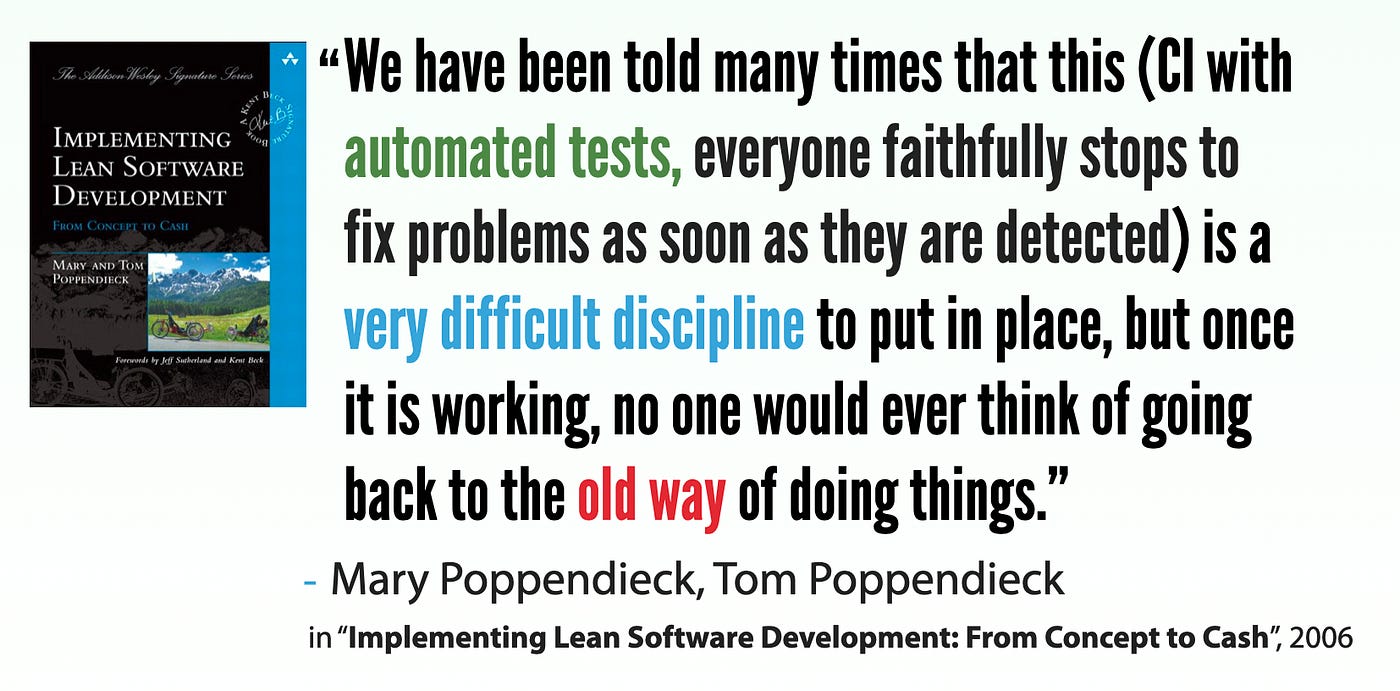
Returning to our title question: if AI (or Vibe, or any other) coding hype promises only a 50% productivity gain, why not invest in E2E test automation and Continuous Testing, which can reliably deliver much higher productivity boosts with minimal investment in tools?
Related reading
